
A LEGACY OF OVER 1,000 YEARS
The Soul of Song Dynasty Tea Culture
Discover the philosophy, history, and unparalleled craftsmanship behind Jianzhan—the official teaware of emperors and the ultimate embodiment of Eastern Zen aesthetics.
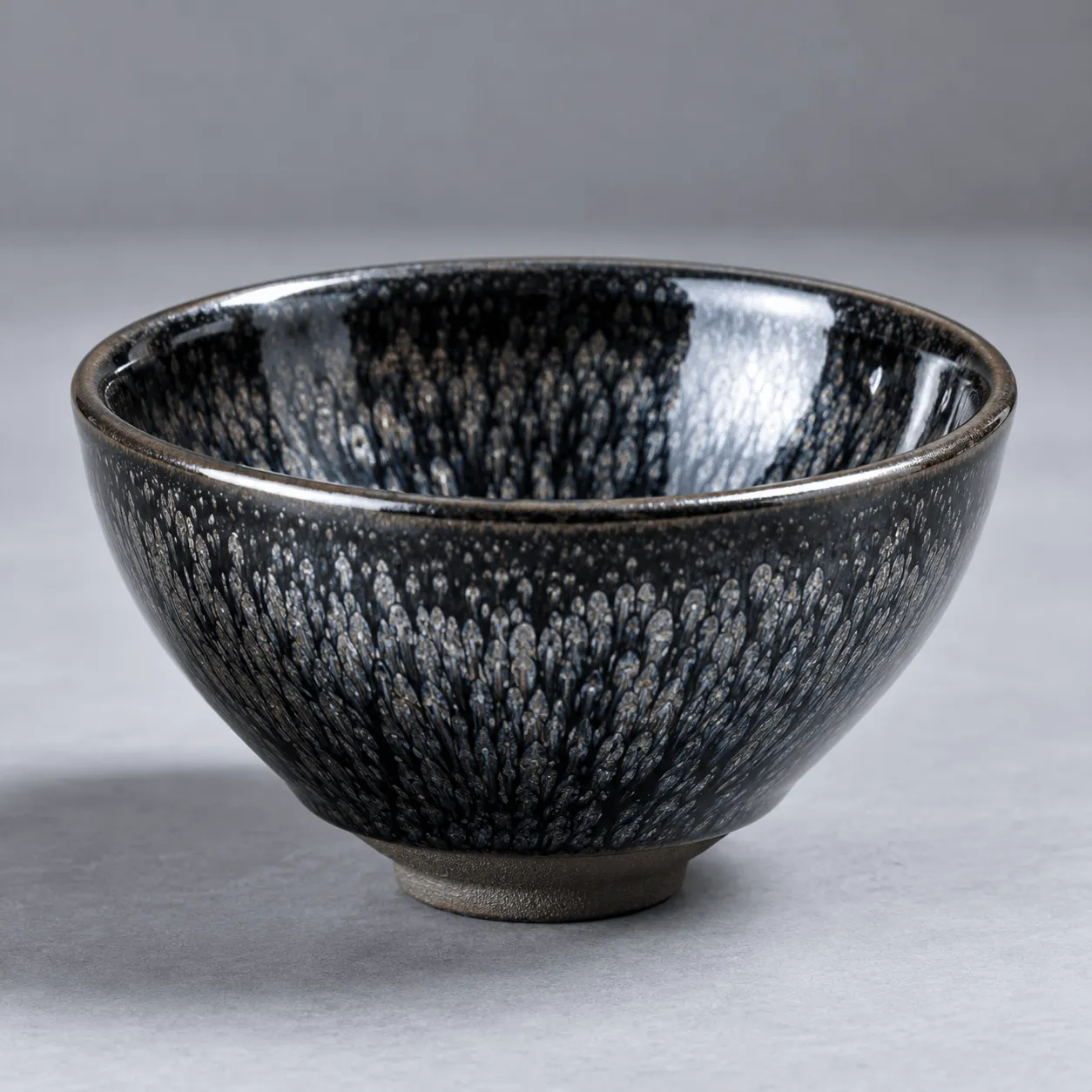
A contemporary Jianzhan tea bowl from Jianyang, Fujian.
WHAT IS JIANZHAN?
A Tea Bowl Born From Clay, Iron, And Fire
Jianzhan refers to the dark-glazed tea bowls associated with the Jian kilns of Fujian, China. Their historic production center lies in present-day Jianyang.
Known for iron-rich bodies and distinctive glaze patterns, Jianzhan reveals the dialogue between local earth, kiln fire, and the culture of tea.
ORIGIN
Jianyang, Fujian
MATERIAL
Iron-rich clay and glaze
CRAFT
Formed through firing
A TRADITION ACROSS CENTURIES
From Jian Kilns To The World
The story of Jianzhan is shaped by place, tea, technology, and time. Its history begins in the kilns of Jianyang and continues through the work of contemporary makers.
LATE TANG
— FIVE DYNASTIES
The Early Jian Kilns
Early Jian kilns produced celadon and other wares. Dark-glazed production developed toward the end of the Five Dynasties and the beginning of the Northern Song.
SONG DYNASTY
960–1279
Tea Bowls In Their Prime
Jian bowls flourished with whisked tea and tea contests. Their dark glaze was praised in tea writings, while surviving “gong yu” and “jin zhan” inscriptions provide evidence of court supply.
AFTER THE
SONG DYNASTY
A Changing Tea Culture
Black-glazed production declined, and some kiln sites shifted toward other wares. Over time, changing markets and the growing use of steeped loose-leaf tea reshaped demand for tea bowls.
1970s
— TODAY
Reviving The Craft
Research and firing experiments helped revive Jian ware techniques from the 1970s onward. In 2011, Jian kiln tea-bowl making was listed as a national intangible cultural heritage practice.
THE TEA THAT SHAPED THE BOWL
Powdered Tea, Jian Bowls, And The Journey East
Jianzhan was not created in isolation. Its form, color, and surface were shaped by the way tea was prepared during the Song dynasty—and by the movement of tea culture across East Asia.
01 SONG DYNASTY DIAN CHA
The Bowl Chosen For Tea
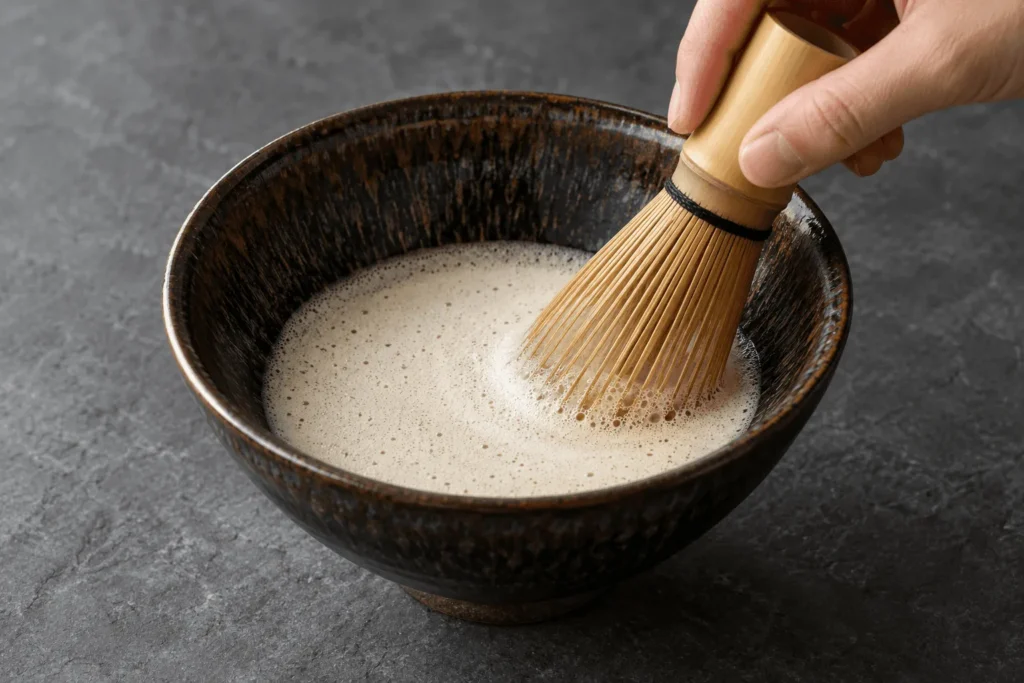
An illustration of dian cha
During the Song dynasty, tea was often prepared from finely ground tea leaves. The powder was mixed with hot water and whisked until a pale foam appeared on the surface.
A dark Jian bowl made this foam easier to see. Its substantial body also held heat well after warming, while its open form gave the drinker room to whisk and observe the tea.
Jian bowls were admired by the Song court and literary elite, and examples marked “gong yu” or “jin zhan” have been found among archaeological materials associated with court supply. At the same time, Jian kilns produced large quantities for everyday use. Their importance lies in this rare combination of refinement, function, and wide cultural reach.
“Tea is white; therefore, a dark bowl is preferred. The Jian’an bowls are deep in color and marked like hare’s fur.”
— Cai Xiang, Tea Record
02 FROM JIAN TO TENMOKU
From Jianyang To Japan
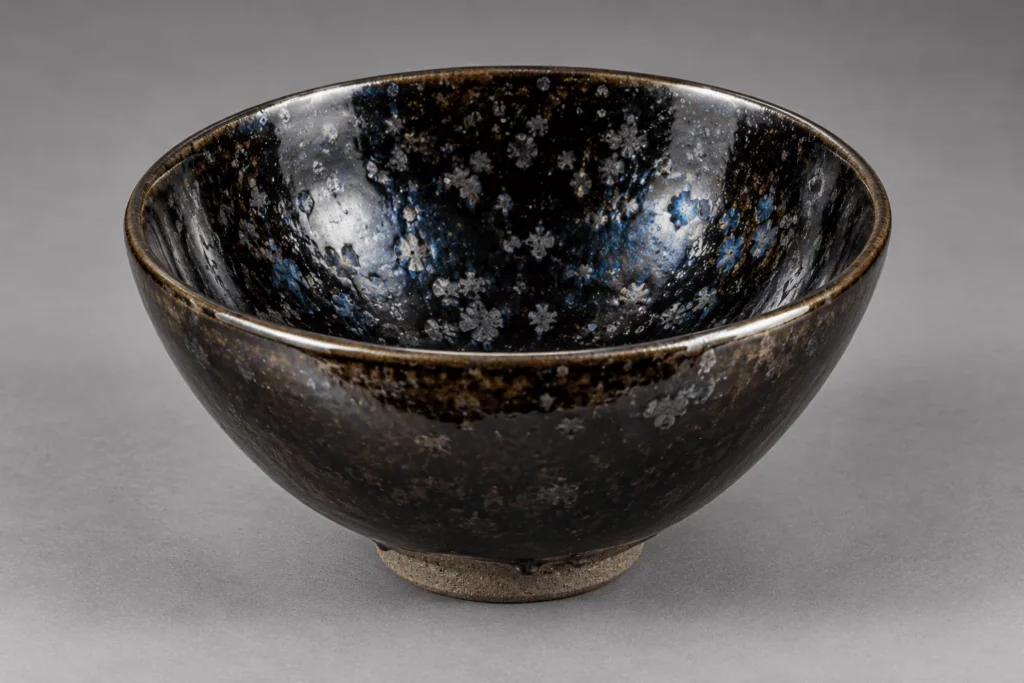
Tenmoku-inspired glaze
During the Song dynasty, Chinese tea bowls reached Japan through maritime trade and exchanges involving Buddhist monks. Jian ware was among the Chinese ceramics that entered Japanese tea culture.
The name “Tenmoku” is traditionally associated with Mount Tianmu in Zhejiang, China, where Japanese monks studied at Buddhist monasteries. In Japanese ceramic terminology, Tenmoku came to encompass several types of tea bowls, especially Chinese dark-glazed wares. Jian ware is an important part of this tradition, although the two names are not interchangeable.
In medieval Japan, prized Chinese tea bowls were collected, classified, and displayed as karamono—Chinese objects valued in elite cultural circles. They also became part of formal tea gatherings, giving Jian bowls a new setting beyond their original use in China.
A celebrated surviving example is the “Inaba Tenmoku” at the Seikado Bunko Art Museum in Tokyo. Made at China’s Jian kilns during the Southern Song dynasty (12th–13th century), this Yōhen Tenmoku bowl is now designated a National Treasure of Japan.
FROM JIAN WARE TO CONTEMPORARY TEA BOWLS
A Historic Tradition, A Living Craft
The story continues in contemporary Jianzhan. Dark glazes, hare’s-fur streaks, and oil-spot markings carry a visual connection to historic Jian ware, while today’s makers explore these qualities through their own materials and firing practices.
For today’s tea drinker, that connection becomes tangible in the bowl itself: the curve of its rim, the texture of its glaze, and the patterns revealed as it turns in the light.
HISTORICAL LINEAGE
Connected to the Jian kiln tradition of Jianyang.
GLAZE LANGUAGE
Hare’s-fur, oil-spot, dark glaze, and iridescent effects emerge through firing.
CONTEMPORARY CRAFT
Made for present-day tea drinkers while preserving the character of traditional Jian ware.
Hare’s Fur And Oil Spots: Patterns Born In Fire
Hare’s-fur streaks and oil-spot markings are two distinctive patterns associated with Jian ware. They develop within iron-rich glazes during firing and cooling, rather than being painted onto the surface. Learning to recognize them brings the bowl’s material and craftsmanship into focus.
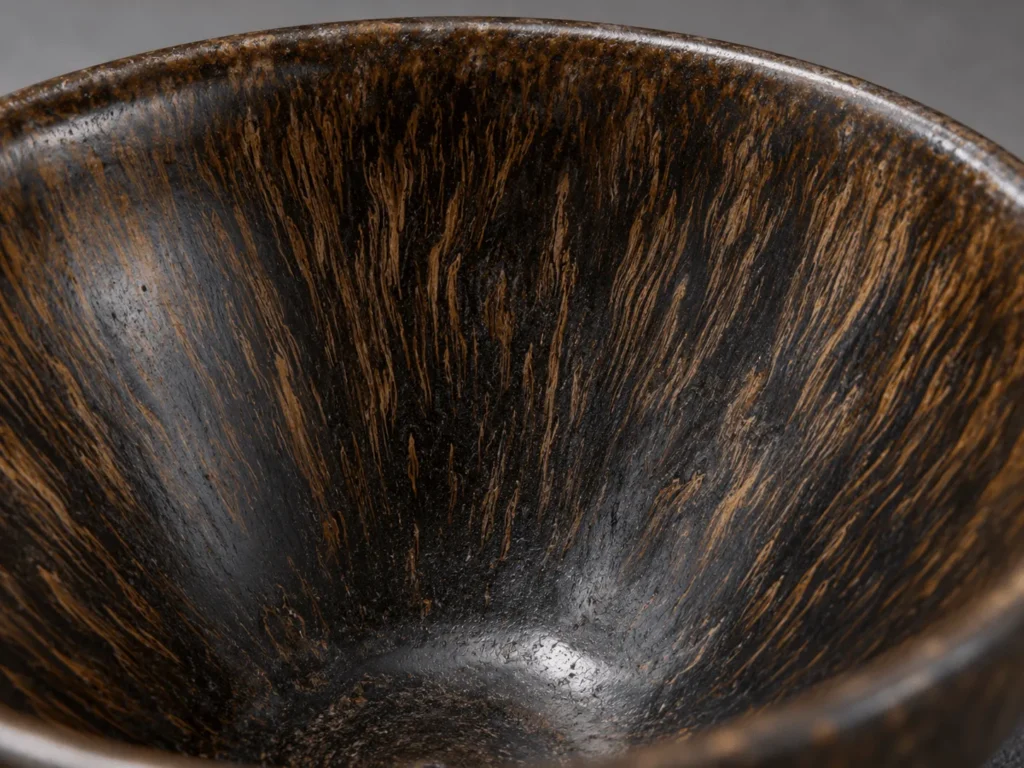
Hare’s-fur glaze illustration
Fine Streaks Across A Dark Glaze
LOOK FOR THE STREAKS
Hare’s-fur glaze takes its name from fine, elongated markings that resemble the fur of a hare. These streaks often run down the bowl’s walls, appearing russet, gold-brown, or silvery against a dark ground.
HOW THEY FORM
During firing, the molten glaze flows along the curved surface. The separation of iron-rich regions and the formation of iron oxide crystals contribute to the streaked pattern. Glaze composition, temperature, kiln atmosphere, and cooling all influence the result.
WHAT TO NOTICE
Follow the streaks from the rim toward the center. Their length, density, and color can vary across a single bowl—details that become easier to appreciate at close range.
Rounded Spots On A Dark Ground
LOOK FOR THE SPOTS
Oil-spot glaze is recognized by rounded or near-rounded markings scattered across a dark surface. They may appear silvery, brown, or metallic, with variations in size and density. The name describes their resemblance to droplets of oil; no oil is added to create the pattern.
HOW THEY FORM
Iron becomes concentrated in parts of the molten glaze, and iron oxide crystals develop as firing and cooling proceed. These processes contribute to the visible spots. Glaze composition, kiln atmosphere, temperature, and cooling influence their appearance.
WHAT TO NOTICE
Compare the individual spots: their outlines, spacing, and reflective character. Unlike the elongated streaks of hare’s-fur glaze, oil spots are primarily read as separate rounded markings, although some can merge or stretch.
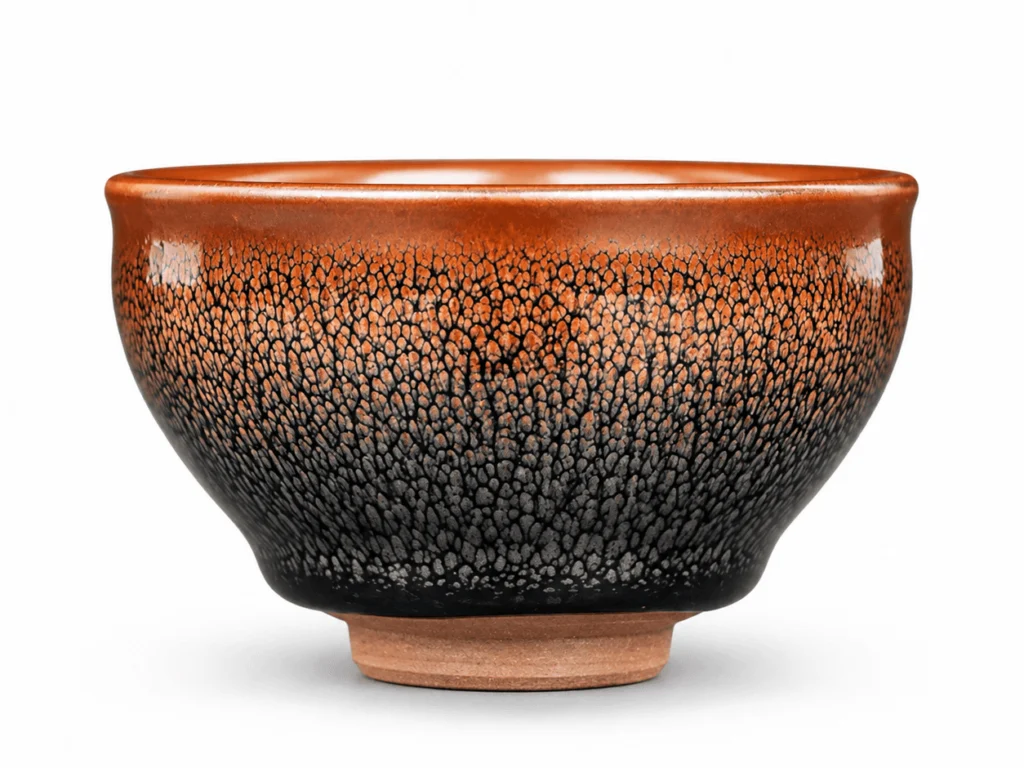
Oil-spot-style glaze on a contemporary tea bowl
Beyond Streaks And Spots
Jian ware also includes dark glazes with few visible markings and warm brown tones often described as “persimmon.” These surfaces show another side of iron-rich glazes, where color, depth, and sheen become the main focus.
Some exceptional historical bowls display iridescent halos around their markings, most famously the Yōhen Tenmoku bowls preserved in Japan. Contemporary makers also explore iridescent effects, but a colorful reflection alone does not identify a bowl as historical Yōhen.
Glaze names describe appearance, not quality grades. Appreciating a bowl means considering its form, glaze, finish, and condition together.
From Clay To Glaze, Through Fire
A Jian bowl takes shape through clay preparation, forming, trimming, glazing, and firing. The maker controls the materials and process, while heat, kiln atmosphere, and cooling influence the final glaze. Understanding these stages reveals the work behind the finished bowl.
Preparing The Clay
Jian ware begins with local clay rich in iron. The clay is prepared, wedged, and refined to remove excess air and create a workable body. Its mineral character later contributes to the depth of the dark glaze.
Shaping The Tea Bowl
The prepared clay is shaped into a bowl by hand or on a wheel. The maker refines the rim, wall, and foot, then trims the surface to establish the final proportions. Small differences in pressure and thickness remain part of the handmade process.
Brushing The Iron-Rich Glaze
The glaze is applied after the bowl has been formed and trimmed. Its iron-rich ingredients create the dark ground associated with Jian ware. The thickness of the glaze and the way it settles on the curved wall affect the patterns revealed after firing.
The Kiln Reveals The Surface
The bowl is fired in a high-temperature kiln, where glaze and clay respond to heat, atmosphere, and cooling. Iron-rich minerals can separate and crystallize within the glaze, revealing streaks, spots, and changing tones only after the firing is complete.
No two firings produce exactly the same surface. The maker prepares the bowl and controls the process, but the final character emerges through the conversation between clay, glaze, atmosphere, heat, and cooling.